
Are kombucha and water kefir the same thing?
Kombucha vs water Kefir: same thing?
Two fizzy, fermented drinks, often shelved in the same fridge section. No wonder people confuse them. And yet, kombucha and water kefir have almost nothing in common, except for being alive (if unpasteurized).
Let's explain.
What actually brings them together
The common ground is fermentation. A natural process where microorganisms (bacteria and yeast) transform sugar into organic acids, carbon dioxide, and a whole range of interesting molecules. That's what gives both drinks their fizz, acidity, and unique properties.
But stopping there would be like saying wine and beer are the same because they both contain alcohol.
Where everything diverges
The fundamental difference comes down to two words: substrate and culture.
Kombucha starts from sweetened tea. Real tea (black, green, or a blend), brewed, sweetened, then fermented with a SCOBY (Symbiotic Culture of Bacteria and Yeast). Fermentation lasts between 7 and 30 days, depending on the desired profile. During this time, yeasts transform sugar into ethanol, which acetic bacteria then convert into acetic acid. It's this double transformation that gives kombucha its tangy character and aromatic complexity (1).
Water kefir starts from sweetened water enhanced with dried fruits (figs, apricots, raisins…). Kefir grains are added, small translucent beads called tibicos, composed of lactic bacteria and yeasts held together by a polysaccharide matrix. Fermentation is quick: 24 to 48 hours. The result is milder, more subtle.
In summary: one is a long fermentation based on tea, the other a short fermentation based on sweetened water. One produces mainly acetic acid, the other lactic acid. These are two different microbial logics.
Two living factories, two teams
This is where it gets interesting.
Kombucha's SCOBY is dominated by acetic bacteria (Komagataeibacter, Acetobacter, Gluconacetobacter) and various yeasts (Saccharomyces, Brettanomyces, Zygosaccharomyces). The acetic bacteria lead the way: they produce acetic acid, build the SCOBY's cellulose, and give the drink its characteristic tangy profile (1, 2).
Water kefir grains are dominated by lactic bacteria (Lactobacillus, Lactococcus, Leuconostoc) which represent 83 to 90% of the microbial population in the grains, complemented by yeasts from the Kluyveromyces and Saccharomyces genera (1, 2). It's a completely different family of microorganisms, producing a completely different type of fermentation.
To simplify: kombucha is an acetic fermentation based on sweetened tea. Water kefir is a lactic fermentation based on sweetened water. Same general principles, very different results.
And where do these two drinks come from?
Kombucha finds its origins in China, where it's believed to have been consumed for over 2000 years before traveling to Russia, Europe, and today the whole world (3). See blog post: https://www.smilekombucha.com/blog/a-brief-history-of-kombucha
The origin of water kefir is hazier. A commonly cited hypothesis places the appearance of water kefir grains on the pads of the Opuntia cactus in Mexico (4). What's certain is that water kefir should be clearly distinguished from milk kefir, which originates from the Caucasus, is made from milk fermented with different grains, and produces a creamy drink, similar to drinkable yogurt. The two share a name, but not much else.
On the palate
Kombucha is tangy, lively, with an aromatic complexity that comes from both the tea and the long fermentation. You'll find notes ranging from fruity to vinegary through floral, depending on ingredients and fermentation time.
Water kefir is milder, more subtle, less acidic. It lends itself well to fruity flavorings, but its base profile is less pronounced.
What we know (and what we don't)
Both drinks contain living microorganisms from fermentation. Scientific literature attributes to these microorganisms a potential role in supporting digestion and intestinal microbiome balance, but clinical studies on humans remain limited for both drinks (2, 5).
What we can say without extrapolating: kombucha provides, in addition to microorganisms, polyphenols from tea (antioxidants whose bioavailability is improved by fermentation) and specific organic acids like glucuronic acid. Water kefir provides a broader bacterial diversity in terms of strain count, primarily lactic bacteria (2, 5).
What we can't say: that one is better than the other. These are two different drinks, with distinct microbial and chemical profiles, and science hasn't yet reached the stage of definitive conclusions.
So, why Kombucha?
At Smile, we brew kombucha because we fell in love with this drink in North America, long before launching the brewery. Alive, complex, tangy, refreshing, with character. Over there, kombucha was already everywhere: in grocery store fridges, in cafés, in people's daily lives. Water kefir, much less so. In 2019, when we decided to bring this expertise to Brussels, the choice came naturally.
And then we thought that offering a finished product that takes about 14 days of fermentation brought more value and convenience as a ready-to-drink than a beverage you can make in 24-48h at home. It's just a choice, not a judgment. After all, yogurt can be made overnight from milk, yet everyone knows the giants of the ready-to-eat yogurt industry…
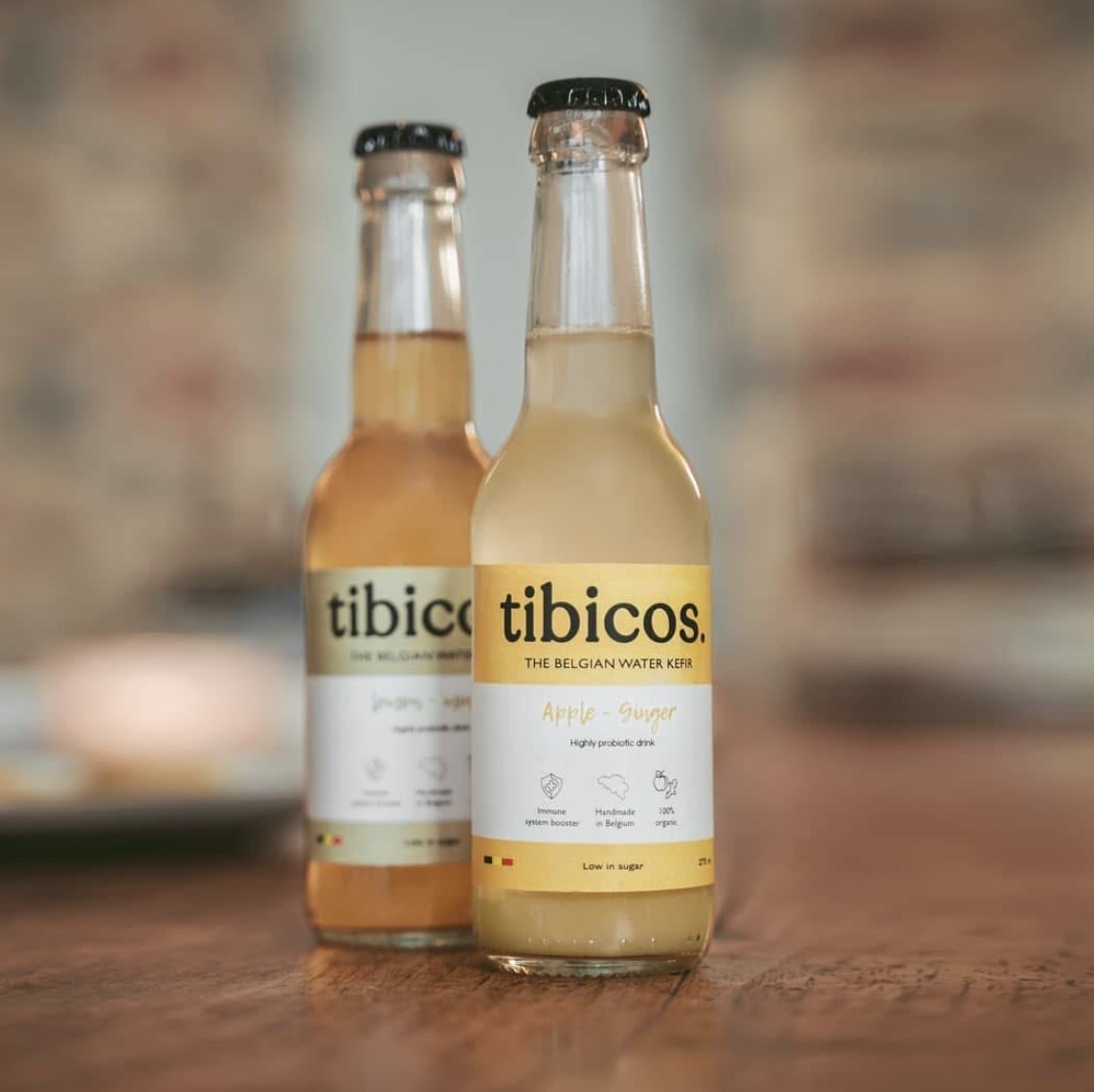
By the way, we know what we're talking about: we ourselves produced water kefir on a contract basis in our brewery, for a brand called Tibicos.
And if one day you come across a water kefir you like, drink it too. Good fermented drinks don't compete with each other. They complement each other.
Disclaimer: Smile brews kombucha, not medical conclusions. This article synthesizes information from scientific publications. The links are there if you want to dig deeper. And if you have a specific health question, your doctor remains your best ally.
Sources:
(1) Mak, W.Y. et al. (2023). Fermented Beverage Benefits: A Comprehensive Review and Comparison of Kombucha and Kefir Microbiome. Microorganisms, 11(5), 1344. https://doi.org/10.3390/microorganisms11051344
(2) Fiorda, F.A. et al. (2017). Microbiological, biochemical, and functional aspects of sugary kefir fermentation - A review. Food Microbiology, 66, 86-95.
(3) Jayabalan, R. et al. (2014). A Review on Kombucha Tea - Microbiology, Composition, Fermentation, Beneficial Effects, Toxicity, and Tea Fungus. Comprehensive Reviews in Food Science and Food Safety, 13(4), 538-550.
(4) Lutz, M.L. (1899). Recherches biologiques sur la constitution du Tibi. Bulletin de la Société Mycologique de France, 15, 68-72.
(5) Gomes de Oliveira, N.L. et al. (2024). Biological Significance of Probiotic Microorganisms from Kefir and Kombucha: A Review. Microorganisms, 12(6), 263. https://doi.org/10.3390/microorganisms12060263
