
Scoby in all its forms
The gelatinous film that floats on the surface of kombucha has a name: it’s called the ‘mother’, ‘jellyfish’, or more commonly SCOBY. Most brewers remove it from the jar, keep a piece for the next batch, and throw the rest away without a second thought.
It’s a bit like throwing away a material that interests chefs, textile designers, biomedical researchers and water treatment engineers all at once.
Let us give you the lowdown.
First, an important clarification
SCOBY stands for Symbiotic Culture of Bacteria and Yeast. And this is where the confusion begins: the term refers to the entire microbial ecosystem, i.e. the fermented liquid AND the surface film. Most of the yeast and bacteria live in the liquid. The gelatinous disc, on the other hand, is mainly composed of bacterial cellulose produced by acetic acid bacteria of the genus Komagataeibacter. It acts as a natural lid, a shield that the microorganisms build to protect their environment (1, 2).
So when we talk about the ‘uses of SCOBY’ in this article, we are referring to this cellulose film. And it is more interesting than it looks: around 90% water when fresh, but once dried, its bacterial cellulose exhibits tensile strength comparable to that of certain synthetic polymers (3).
It is not just ‘the slimy stuff in the jar’.
In the kitchen: yes, it’s edible
The film is entirely edible. It has a firm, slightly gelatinous texture and a neutral or very slightly tangy taste. It’s more versatile than you might think (4).
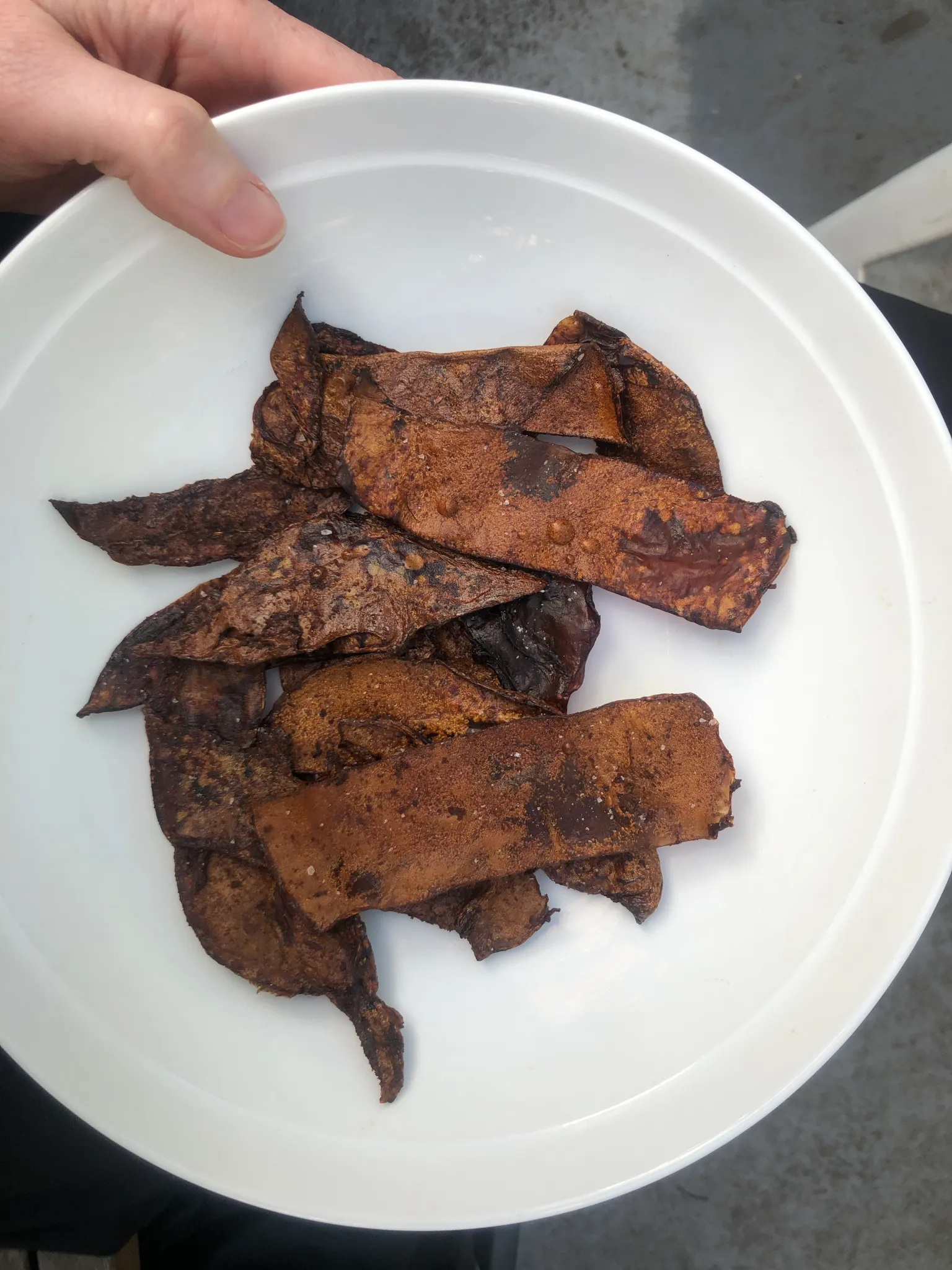
SCOBY crisps: cut into strips, marinated in soy sauce, tamari or sesame, then baked in the oven at a low temperature, it makes a crispy and tasty snack.
Natural sweets: blended with fruit juice and sugar, moulded and then dried, the film transforms into a natural sweet. Free from animal gelatine and additives.
Base for vegetable tartare: finely chopped, it mimics the texture of raw fish or silken tofu. Some chefs use it to create original fermented starters.
In bread: incorporated into the sourdough, it adds a slight tang to the crumb and enriches the dough with microorganisms.
These are not niche applications. Bacterial cellulose is a recognised ingredient in food research for its texturising properties and its compatibility with vegan diets (5).
In textiles: the future of plant-based leather?
This is where it gets really interesting. The bacterial cellulose produced by SCOBY is one of the most widely studied biomaterials as a replacement for animal leather (6).
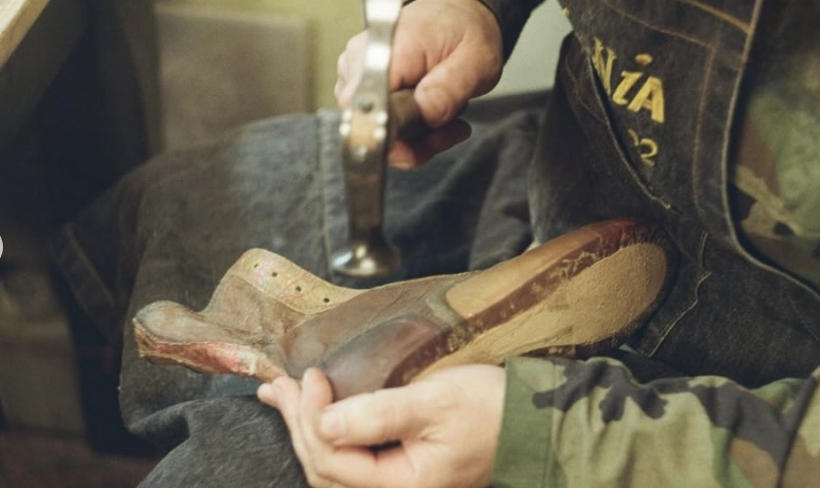
The process involves allowing the film to grow over a large surface area, harvesting it, drying it and treating it. The result is a thin, supple sheet that can be dyed, sewn and embossed. Just like leather. Designer Suzanne Lee, founder of Biocouture, has been working with this material for over ten years to produce jackets, bags and shoes (7). It is lightweight, biodegradable, and its production requires neither livestock farming nor petroleum.
The challenge remains moisture: when exposed to water, bacterial cellulose can soften and lose its shape. Treatments based on wax, natural oils or bio-based resins are currently being investigated (8). We are not yet at the stage where the leather can withstand a Belgian storm. But research is making progress.
In cosmetics: from fermentation to skincare
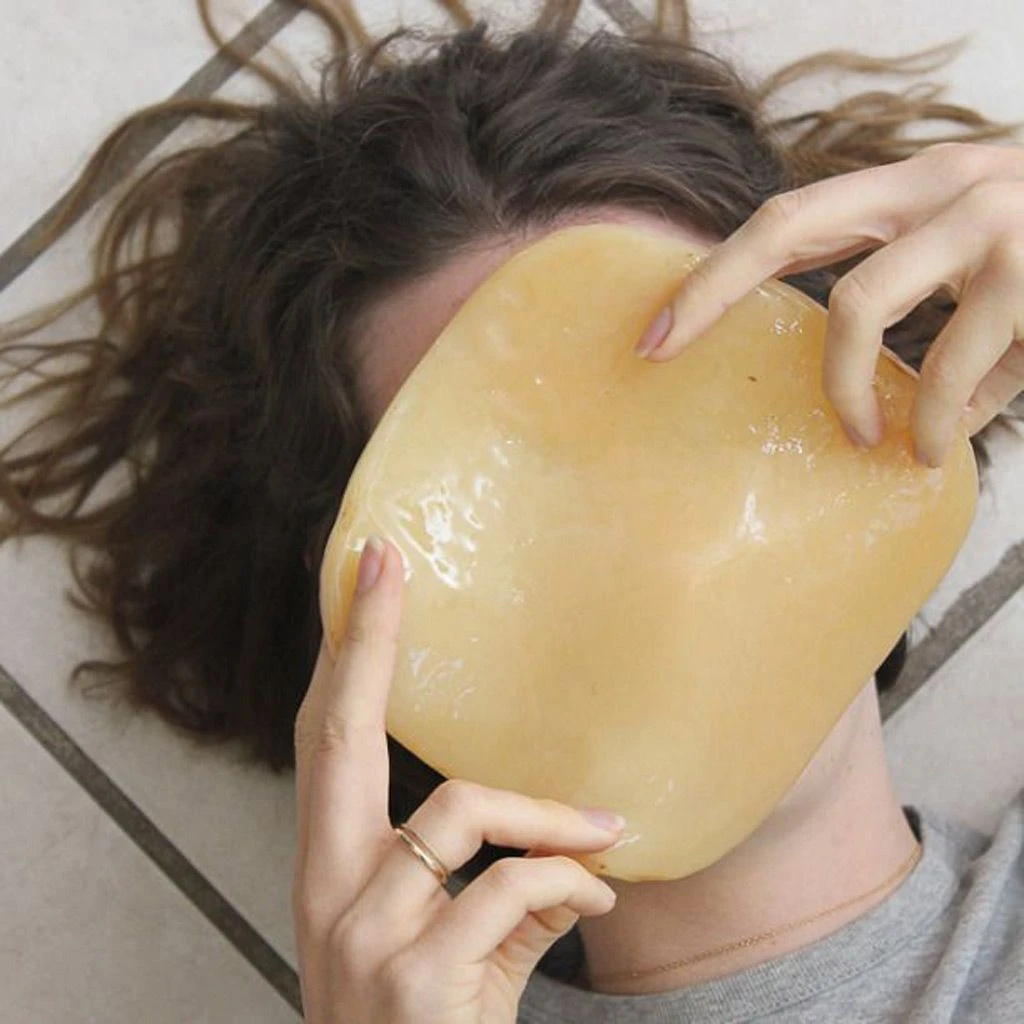
Bacterial cellulose is already used in the cosmetics industry in the form of high-end bio-cellulose masks. These masks, which are sometimes sold at exorbitant prices, owe their effectiveness to the material’s ability to mould perfectly to the contours of the face and deliver active ingredients deep into the skin (9).
What bacterial cellulose offers in skincare: occlusive hydration (the film slows down water evaporation from the skin’s surface), organic acids (gluconic, lactic) with gentle exfoliating properties, and tea-derived polyphenols that have undergone fermentation (9, 10).
At home, some people use thin slices of the film directly as a face mask for 15 to 20 minutes. It’s a bit odd. But it works all the same.
In medicine: the most promising way
Biomedical research is taking a serious interest in bacterial cellulose. Its biocompatibility (the fact that the human body does not reject it) makes it a candidate for advanced dressings, temporary skin substitutes for severe burn victims, and even dialysis membranes (11, 12).
Studies have shown that bacterial cellulose dressings maintain the moisture necessary for healing whilst creating a barrier that limits microbial growth (13).
We’re a long way from the kombucha jar. And yet it’s exactly the same material.
In water filtration: the way we’re keeping a close eye on
This may be the most surprising development. Researchers are investigating the potential of bacterial cellulose as a filter membrane for water treatment. Thanks to its nanoporous structure and large surface area, it has been shown to retain microplastics with up to 99% efficiency in laboratory tests (14).
And it goes further: a review published in 2025 assesses the potential of (modified) bacterial cellulose for capturing PFAS – those persistent pollutants nicknamed ‘forever chemicals’ - with preliminary results exceeding 90% removal under controlled conditions (15). The material is biodegradable, renewable, and its production could be fuelled by agricultural waste.
We are currently at the research stage. But the direction is fascinating.
Composting: the minimum
A used SCOBY that is too thick or too old to ferment can simply be composted or buried directly in the ground. As it decomposes, it releases organic acids that slightly acidify the soil, which is ideal for acid-loving plants such as blueberries, rhododendrons or hydrangeas (16).
This is the simplest method. And it’s certainly better than the bin.
Free SCOBYs at Smile
At Smile, we produce more SCOBYs than we can use. And the reason we were able to start this venture is because, one day, someone gave us a SCOBY. That’s how it works in the world of kombucha: we pass them on.
We want to continue in this spirit. You can come and collect a free SCOBY from the brewery (Avenue Georges Henri 410, 1200 Brussels, Monday to Friday from 9am to 5pm), provided you bring your own container.
Alternatively, you can also grow one at home using a bottle of unpasteurised raw kombucha. We explain how in our article on home brewing.
Disclaimer: Smile brews kombucha, not biomaterials (at least, not yet). This article summarises information from scientific publications. If a particular use intrigues you, the sources are there for you to explore further.
Sources :
(1) Jayabalan, R. et al. (2014). A Review on Kombucha Tea: Microbiology, Composition, Fermentation, Beneficial Effects, Toxicity, and Tea Fungus. Comprehensive Reviews in Food Science and Food Safety, 13(4), 538-550.
(2) Villarreal-Soto, S.A. et al. (2018). Understanding Kombucha Tea Fermentation: A Review. Journal of Food Science, 83(3), 580-588.
(3) Ul-Islam, M. et al. (2015). Bacterial cellulose composites: synthetic routes and applications. Carbohydrate Polymers.
(4) Nummer, B. (2020). Home Fermentation Guide. Utah State University Extension.
(5) Leonarski, E. et al. (2025). Kombucha Bacterial Cellulose: A Promising Biopolymer for Advanced Food and Nonfood Applications. Foods, 14(5), 738. https://doi.org/10.3390/foods14050738
(6) Laavanya, D. et al. (2021). Current challenges, applications and future perspectives of SCOBY cellulose of kombucha fermentation. Journal of Cleaner Production, 295, 126454.
(7) Lee, S. (2011). Grow your own clothes. TED Global.
(8) Ludwicka, K. et al. (2020). Bacterial nanocellulose: a biobased polymer for active and intelligent food packaging. Polymers.
(9) Chang, W.S. et al. (2012). Biopolymer-based facial mask. Carbohydrate Polymers.
(10) Foresti, M.L. et al. (2017). Bacterial cellulose applications. Composites Part B.
(11) Petersen, N. & Gatenholm, P. (2011). Bacterial cellulose-based materials and medical devices. Applied Microbiology and Biotechnology.
(12) Czaja, W. et al. (2007). The future prospects of microbial cellulose in biomedical applications. Biomacromolecules.
(13) Sulaeva, I. et al. (2015). Bacterial cellulose as a material for wound treatment. Biotechnology Advances.
(14) Cazón, P. & Vázquez, M. (2022). Bacterial cellulose biopolymers: the sustainable solution to water-polluting microplastics. Water Research, 223, 118952.
(15) Tran, T.H.N. et al. (2025). Bacterial cellulose for emerging contaminants: A review of applications for PFAS, nanoplastics, and endocrine disruptors in water treatment. Science of the Total Environment.
(16) Watawana, M.I. et al. (2015). Health, wellness and safety aspects of the consumption of kombucha. Journal of Chemistry.
